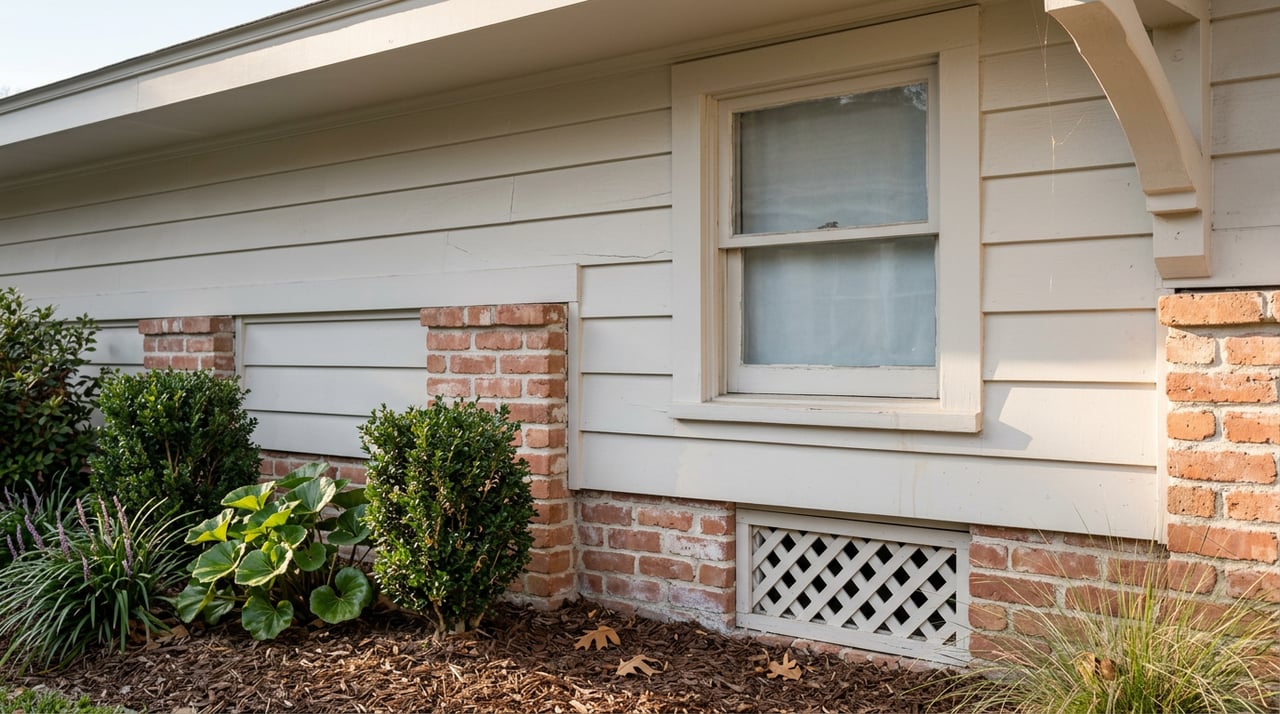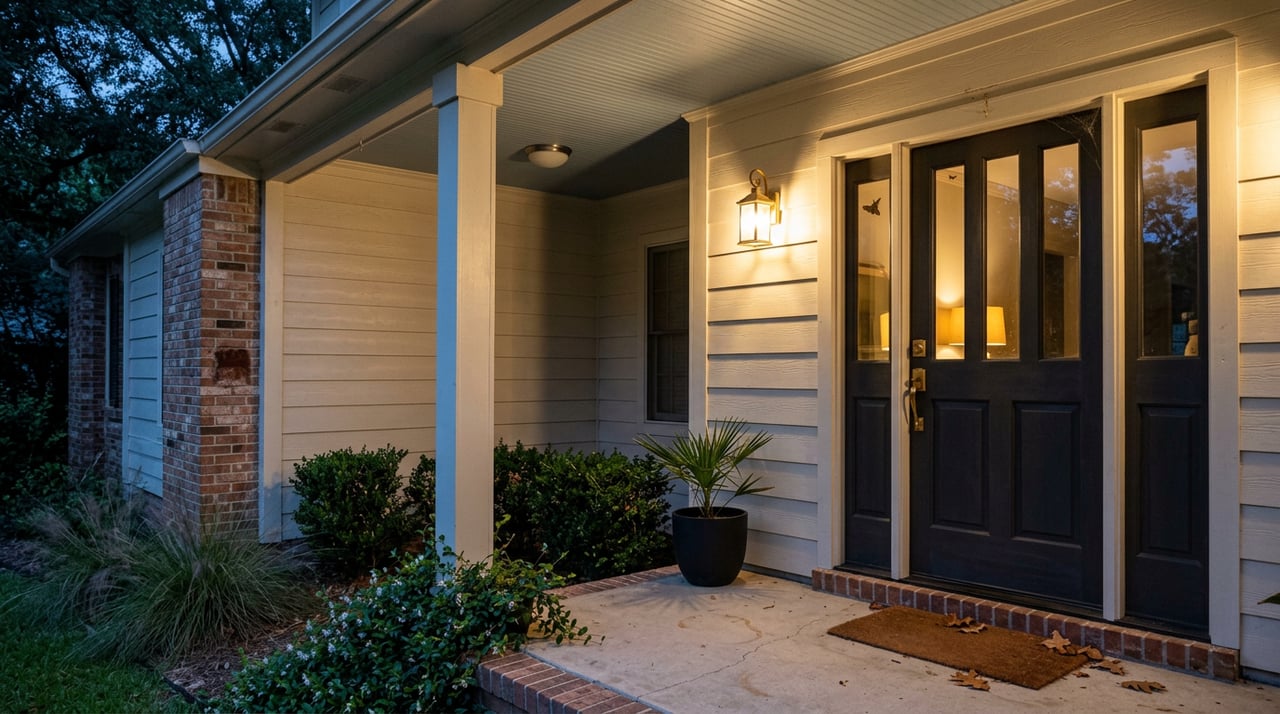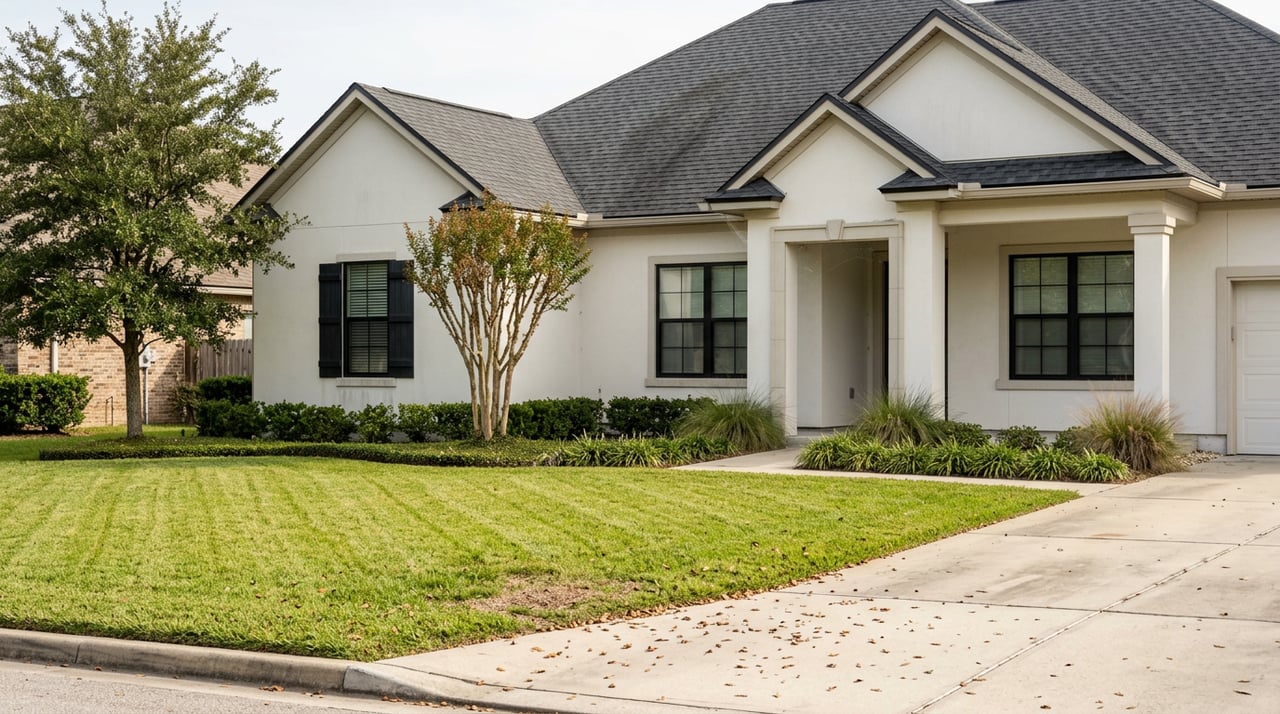
Two homes list at $400,000. Both are three years old, four bedrooms, brick and stucco, sitting on quarter-acre lots inside master-planned communities west of Houston. One is in Elyson. The other is in Cinco Ranch. A buyer working from the sticker price alone would treat them as interchangeable. The mortgage calculator says so. The listing photos say so.
Then the tax estimate comes back, and the two homes are not close. Elyson's newer bond issuance puts its Municipal Utility District rate somewhere around $1.00 to $1.10 per $100 of assessed value. Cinco Ranch, decades further into paying down its own bonds, sits closer to $0.45 to $0.55. On identical purchase prices, that gap alone can run $460 to $510 a month once every taxing layer is added up, which works out to $5,500 to $6,100 a year, or somewhere between $165,000 and $183,000 across a 30-year loan term. Same price. Same square footage. Different math entirely.
This is the piece of Houston's suburban market that median-price headlines never show, and it is the reason a buyer comparing Katy to Sugar Land to Pearland by list price alone is comparing the wrong thing.
Why "Katy" Isn't One Tax Rate
A Municipal Utility District, or MUD, is a special taxing district that Texas developers use to finance water lines, sewer systems, drainage, and roads in land that sits outside a city's utility service area. The developer builds the infrastructure, the district issues bonds to cover the cost, and homeowners repay those bonds over roughly 15 to 30 years through an added line on their property tax bill. It sits on top of county, school, and hospital district taxes, not instead of them.
There are more than 900 of these districts across the Houston metro, and they are not distributed evenly. Zip code 77494, which covers the Katy and Cinco Ranch corridor, contains 36 separate MUDs on its own, more than any other zip code in the region. At the same time, 123 of the 252 zip codes in the metro contain no MUD at all, concentrated inside Houston's city limits and the older incorporated suburbs where city utilities were already built before the subdivisions went up.
That split matters because it means a single community name can span multiple tax jurisdictions at completely different points in their repayment schedule. Cinco Ranch alone is served by a collection of separate MUDs, each with its own board, its own bond history, and its own rate. A section of Cinco Ranch that was built out twenty years ago can carry a materially lower rate than a section platted more recently, even though both carry the same neighborhood name on a listing sheet.
What the Rate Bands Actually Look Like Right Now
Pulling together current district-level figures for a handful of well-known Katy-area communities shows how wide the spread runs:
| Community | Approximate MUD rate (per $100 valuation) | Approximate total tax rate |
|---|---|---|
| Cinco Ranch (mature sections) | $0.45 – $0.55 | ~2.9% |
| Cross Creek Ranch | $0.80 – $0.90 | ~3.1% – 3.3% |
| Cane Island | $0.90 – $1.05 | ~3.1% – 3.3% |
| Firethorne | $0.80 – $0.95 | not separately reported |
| Elyson | $1.00 – $1.10 | ~3.2% – 3.4% |
A mature district with most of its bonds retired can sit as low as $0.10 to $0.25 per $100. A district that just issued new bonds can run $1.00 to $1.50 or higher. On a $400,000 home, that range alone represents $200 to $400 or more in monthly payment, which lenders translate into $30,000 to $70,000 of reduced buying power on paper, even before anything else about the home changes.
Rates Don't Always Move the Way Buyers Expect
The common assumption is that MUD rates only fall as bonds age out. That is true in the ordinary case, but two recent examples show the mechanism cuts both ways.
In Fort Bend County, Sienna MUD 2 was annexed by the City of Missouri City and, according to the county tax assessor's office, no longer carries a current-year tax at all. Annexation dissolved the district and folded its remaining obligations into the city, which for homeowners there erased a tax line entirely rather than gradually reducing it.
Meanwhile, the Cypress-Fairbanks Independent School District board adopted a 2025 tax rate of $1.0669 per $100 of valuation, its lowest rate in nearly four decades, a two-cent decrease from the year before. That's the school district layer easing at the same time a nearby MUD inside the same footprint could still be sitting at an elevated rate because its own bonds are unrelated to the school district's finances. A buyer who sees a headline about falling school taxes and assumes the whole bill is trending down is only looking at one layer of a stack that moves independently, district by district.
Sugar Land shows the same principle from a different angle. The city's own tax rate makes up roughly 21 percent of a typical residential bill inside Fort Bend ISD and about 19 percent inside Lamar CISD, and that share drops further once a MUD or Levee Improvement District is added to a specific address. The "Sugar Land tax rate" people quote informally is usually just the city's slice. The number that actually lands on an escrow statement is the sum of every entity taxing that parcel, and the city is often the smallest piece of it.
Reading This Against Where the Market Sits Today
As of mid-2026, the median listing price across the Houston-The Woodlands-Sugar Land metro runs around $360,000, with homes averaging 60 to 80 days on market, a buyer-favorable stretch compared to the tighter conditions of 2021 and 2022. A January 2026 look at individual submarkets showed Katy holding a flat average sales price near $411,000 with 59 days on market, Sugar Land posting a 23 percent jump in average sales price to $659,000, and The Woodlands leading on price per square foot at $245 with homes moving in 40 days.
Longer days on market and rising inventory give buyers something they did not have three years ago: room to ask harder questions before writing an offer, including the tax question. In a market where sellers and builders are already offering rate buydowns and closing cost credits to move new construction in the Katy corridor, a buyer who walks in already knowing the specific MUD rate for an address is negotiating from a stronger position than one who only found out at underwriting.
Checking the Actual Number Before You Write an Offer
The rate for any specific address is public record, and it takes a few minutes to pull directly rather than relying on a community-wide average.
- Search the exact address on the Harris County Appraisal District's tax rate page if the property sits in Harris County, or the Fort Bend Central Appraisal District's tax rate listing for Fort Bend County addresses. The property detail page lists every taxing entity attached to that parcel and its individual rate.
- Add every entity together, not just the one labeled MUD. County, school district, hospital district, and any Levee Improvement District all stack on top of it.
- Ask whether the standard homestead exemption applies across every layer. It reliably reduces the taxable value used for school district taxes, but MUD districts set their own exemption policies, and some offer a smaller exemption or none at all.
- If the property is in Fort Bend County, confirm which office currently handles collection. The county took over billing for districts like Fort Bend Levee Improvement District 17 in September 2025, and some MUDs, like Sienna MUD 2, have been folded into a city and no longer bill separately at all.
Harris County alone values roughly 1.8 million properties a year, and appraisal notices go out mid-April with a protest deadline of May 15 or 30 days after the notice, whichever is later. The same records that show a MUD rate also show that deadline, which is worth noting before a buyer's first full tax year comes due.
FAQ
Is a MUD tax the same thing as an HOA fee? No. The two are unrelated. An HOA fee covers community amenities and rule enforcement and goes to a homeowners association. A MUD tax funds water, sewer, drainage, and road infrastructure and is collected alongside county and school taxes through the mortgage escrow account. Some communities carry both.
Do MUD rates always go down over time? Usually, as bonds are repaid on their original 15 to 30 year schedule. But a district can issue new bonds for additional infrastructure, which keeps the rate elevated, or a city can annex the district and dissolve it entirely, which changes the math in the other direction. Confirming the current rate for a specific address, rather than assuming a trend, is the only reliable approach.
Choosing between Katy, Sugar Land, Pearland, and The Woodlands is rarely just a question of which suburb fits a lifestyle. It's a question of which specific tax district a particular address sits inside, and that number deserves the same scrutiny as the price on the sign. Urban Access Properties pulls the full taxing entity breakdown for every address a buyer is seriously considering, so the number on the mortgage pre-approval matches the one that shows up on the first escrow statement. Schedule a free consultation to run the real math on your shortlist before you write an offer.